ServicesGutters
Gutters in Bromley, Set at the Right Slope and Built to Hold
We install new gutters and repair tired ones so rainwater comes off your roof and lands well clear of your home. It comes down to small things: a steady slope, hangers close enough to hold winter ice, and downspouts pointed somewhere safe. We'll look it over and give you a free estimate.
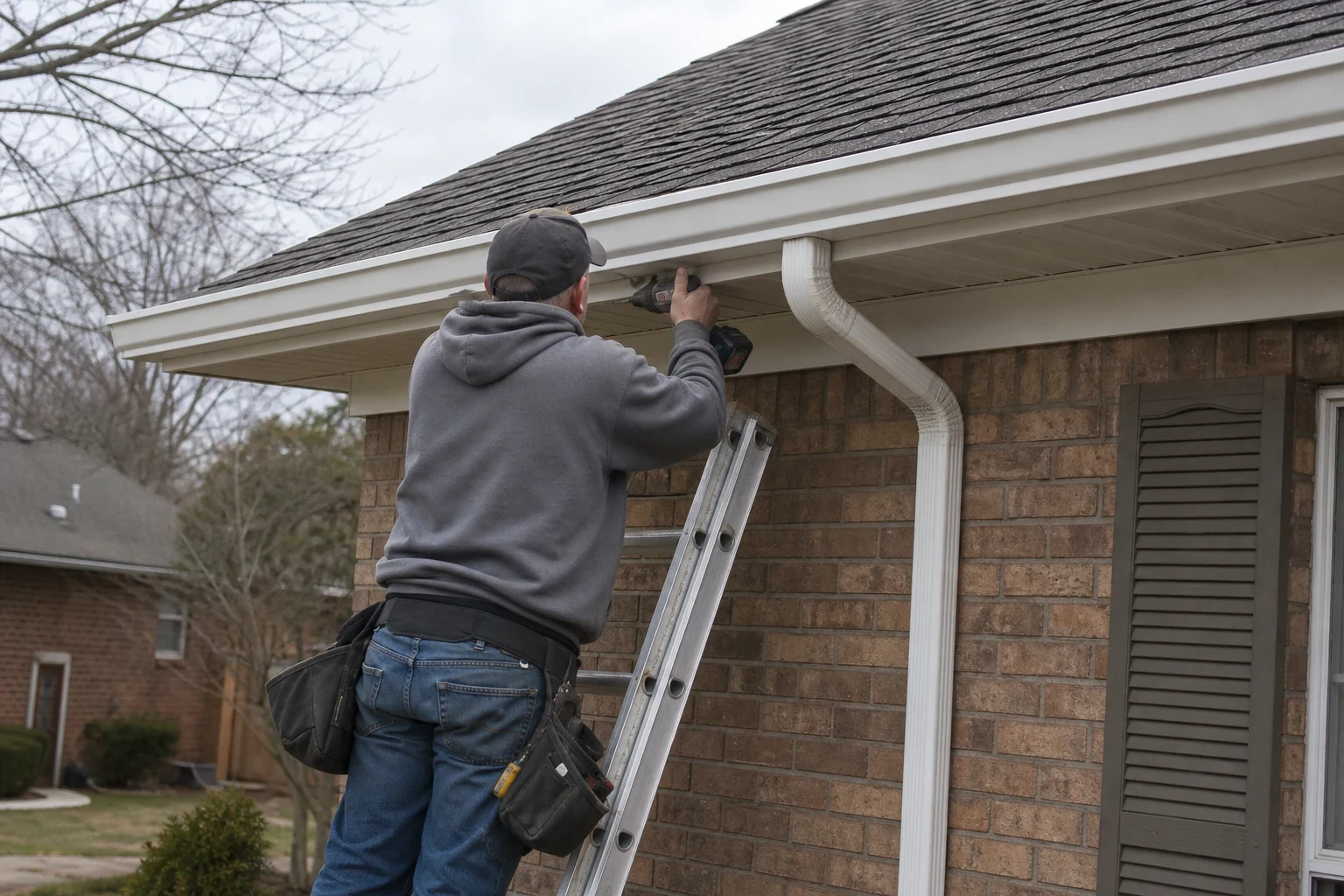
Why gutter details matter on your home
A gutter catches the rain sliding off your roof and moves it to a spot where it does no harm. When one fails, water spills over the edge, soaks the fascia board, splashes up on the siding and pools against the foundation. That damage builds slowly and quietly, so people often find it late.
We form continuous gutters on site, cut to the length of each wall, so the long straight runs have no joints to pull apart. We also fix gutters that are mostly sound but sag, leak at a corner or drain the wrong way. If a repair will do the job, we tell you that.
Winters here freeze and thaw over and over. That cycle works loose hangers free and opens tired corners, so we build every run to hold up to it.
What our gutter work includes
- One-piece runs made to measure
- We form aluminum gutters on site from a coil and cut each run to fit. Corners and end caps are the only joints. Each one gets riveted and sealed.
- Slope set with a string line
- We pitch gutters about a quarter inch for every ten feet toward the downspout. Too flat and water sits and freezes. Too steep and it overshoots the outlet and looks crooked from the street.
- Hidden hangers, spaced close
- We fasten with hidden hangers screwed into the fascia, about two feet apart. Old spike-and-ferrule setups loosen as the wood swells and shrinks. Screws hold.
- Water kept in front of the fascia
- We make sure the drip edge laps down into the gutter so water can't run behind it and rot the board. It's a small detail and the one we see skipped most often.
- Downspouts that go somewhere
- We size outlets for the roof area they drain and add elbows or extensions to carry water several feet out from the foundation.
- Fascia repair first
- If the board behind your old gutter is soft, we show you and replace the bad sections before new gutters go up. New metal on rotten wood just moves the problem.
Signs your gutters need work
Water pouring over the front
If water sheets over the edge in a steady rain, the gutter is clogged, too small or pitched the wrong way.
Sagging runs
A gutter that dips or pulls away from the house has loose or missing hangers. Left alone, the weight of wet leaves and ice will pull it down.
Drips at corners and joints
Old sealant dries out and cracks. A steady drip at a corner usually means a joint has opened up.
Stains or peeling paint on the fascia
Dark streaks or flaking paint right behind the gutter point to water getting behind it. The wood may already be soft.
Puddles or washouts by the foundation
Bare spots in the mulch, a trench under a downspout or a damp basement wall after rain all mean water is landing too close to your home.
How a gutter job goes
- 1
Free look and estimate
We walk the roof edge, measure every run, and check the fascia, drip edge and downspouts. You get photos of what we found and a written estimate with each item listed.
- 2
Setup and protection
We cover beds and shrubs under the work area and use ladder standoffs so nothing rests on your new gutters or your siding.
- 3
Old gutters off, wood checked
We take down the old gutters and press-test the fascia. Any soft wood gets replaced before anything new goes up.
- 4
New runs hung and sealed
We form each run, snap a line for the slope, hang it on hidden hangers, and seal and rivet the corners and outlets.
- 5
Water test and cleanup
We run a hose in every section to confirm it drains to the downspout. Then we sweep the yard with a magnet and haul away the old metal.
What sets the price of gutters
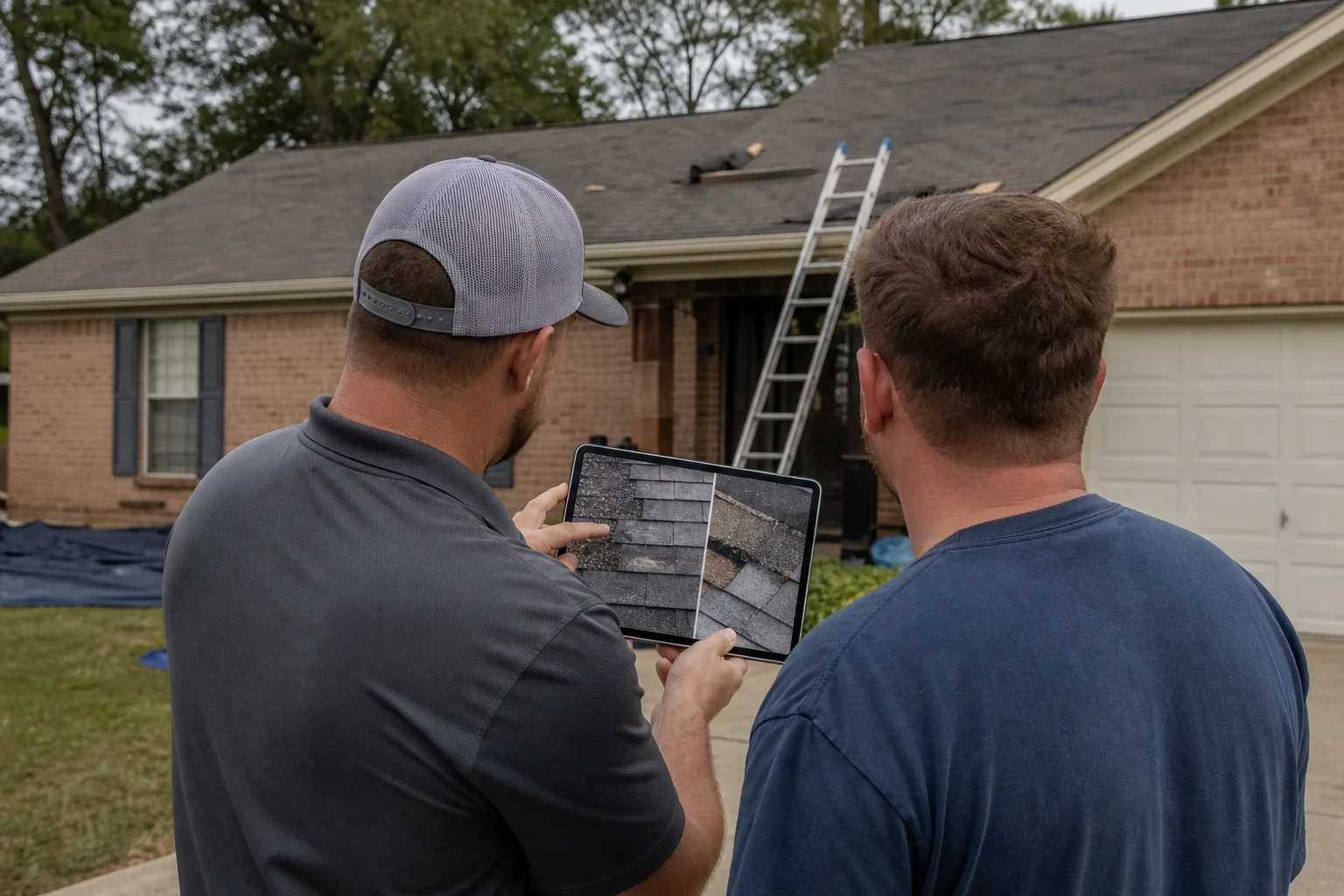
We measure every house, so gutter prices aren't a guess. The number depends on how many feet of gutter you need, how much ladder work it takes to reach them, and whether the boards behind them are still solid. Each of those shows up on your written estimate before we start.
- Length and corners
- Total linear feet sets most of the price. Each inside or outside corner adds labor and sealing.
- Height and access
- A second or third story, a steep yard or a deck below the work area means more ladder setup and more time.
- Gutter size and downspouts
- Six-inch gutters cost more than five-inch. The number of downspouts and how far they need to carry water also adds up.
- Fascia condition
- Rotten boards have to be replaced before new gutters go on. We can't know how much until the old gutters come down, so we show you any added wood before we replace it.
Gutter questions we hear
Something not covered here? (859) 695-6367
Is it worth fixing my gutters, or is it time to replace them?
A fix is enough more often than people expect. Fresh sealant at the corners, rehanging a sagging stretch or adding a downspout solves a lot of problems. When the metal is dented, the runs are patched together from short pieces, or the fascia is rotting along most of the house, a full replacement is the better spend. We'll tell you plainly which side of that line you're on.
Should I get five-inch or six-inch gutters?
Five-inch works for many homes. Six-inch is worth it on a steep roof, a large roof plane draining to one run, or a spot where water already overshoots. We look at the roof size and pitch before we recommend either.
Should I replace my gutters when I get a new roof?
It's a good time to think about it. The drip edge gets replaced during a roof replacement, and gutters often have to come down anyway. If yours are in good shape we can rehang them. If they're near the end, doing both at once saves a second setup.
How long does a gutter install take?
Most houses take a day. Bigger homes, tall walls or a lot of fascia repair can push it longer. We'll give you a realistic time frame with your estimate.
Can you look at my roof during the gutter visit?
We can. Problems at the eave often point to the roof above, like piles of shingle granules in the trough or a stain near the overhang. We'll write down anything we notice, and you can ask for a free roof inspection on the same phone call. Our roof inspections page lays out what that visit covers.
How often should gutters be cleaned?
Twice a year is a good rule, once in late spring and again after the leaves drop. Homes with big trees close by may need it more often. Clogged gutters hold water and ice, and that weight is what pulls hangers loose.
Let's take a look at your gutters
We'll measure, check the wood behind them and show you what we find. The estimate is free, and you'll know the full price before any work starts.