ServicesRoof Repair
Roof Repair in Bromley That Holds Through the Next Storm
Most leaks start at one small spot: a lifted shingle, a cracked pipe boot, flashing that was never sealed right. We find that spot, fix it with the right materials and nail it the way it should have been done the first time. You get a dry ceiling and a straight answer.
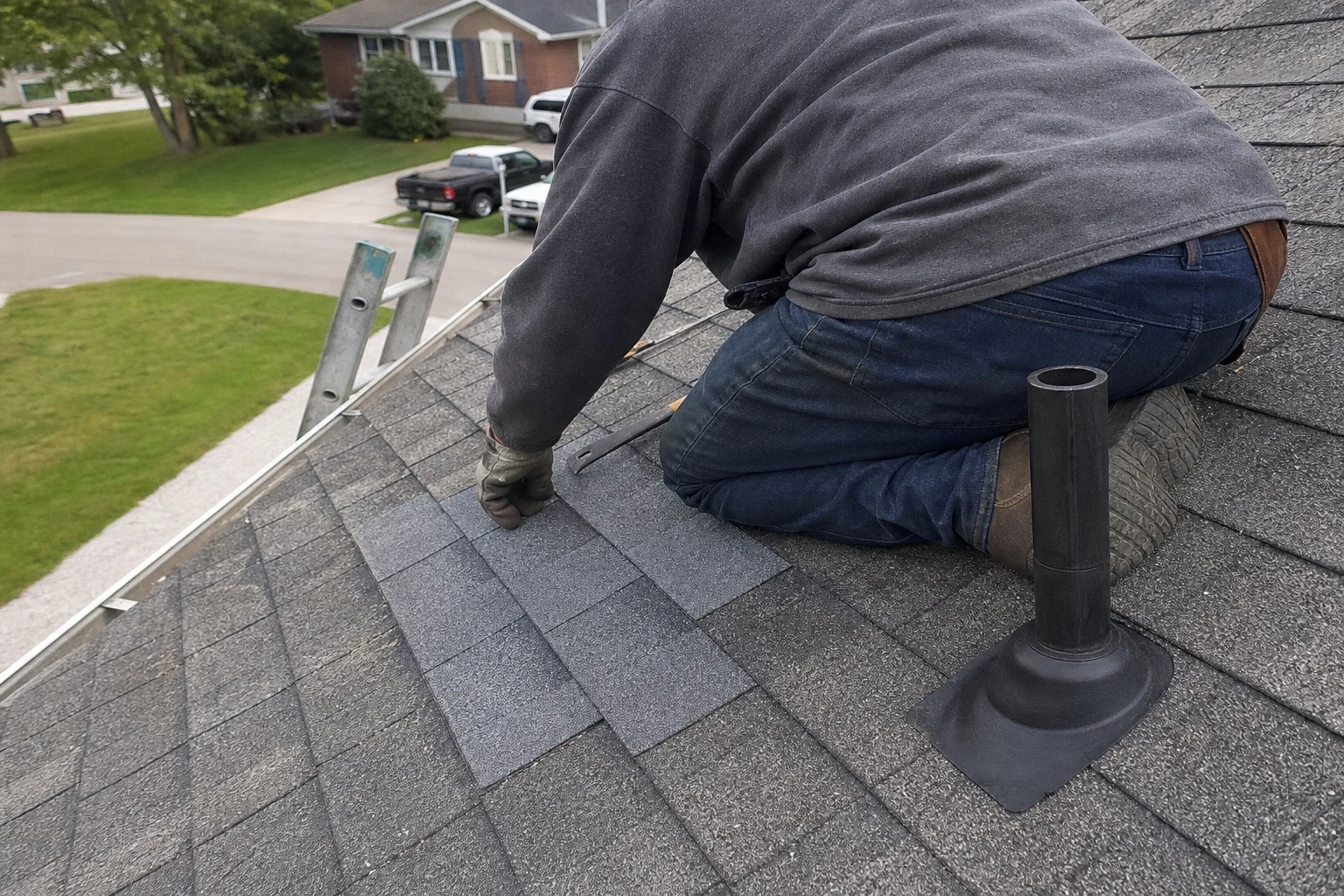
When a Repair Is the Right Call
A roof does not have to be old to leak. On a lot of the roofs we see, the shingles still have years left, but one detail failed. A piece of step flashing slid out of place. A vent boot cracked. Nails were set too high and the shingle above them blew loose. Those are repair jobs, and fixing them well costs far less than a new roof.
We tell you plainly when a repair makes sense and when it doesn't. If the shingles are brittle across a whole slope, or the decking is soft in more than one area, a patch only buys a few months. In that case we'll walk you through roof replacement and let you decide. If you just want a second set of eyes first, our roof inspections page covers what we check.
What Our Roof Repair Work Covers
Leak tracing
We start in the attic when we can, follow the water stains up the rafters and match them to what we see outside. Water often runs a few feet along the boards before it drips, so the stain on your ceiling is rarely right under the hole.
Shingle replacement
We lift the courses above the damage, pull the old nails and slide in new shingles. Each one gets four nails set in the nailing strip, not above it. We match color and profile as closely as we can and tell you up front if a close match isn't possible.
Chimney, wall and skylight flashing
These joints are where most leaks start. We replace bent or rusted step flashing piece by piece and set counter flashing into the mortar joint, instead of smearing tar over the gap.
Pipe boots and vents
The rubber collar around each plumbing stack dries out and splits after enough hot summers and hard freezes. We put on a new collar and check that the vent pipe itself is fastened tight and sealed.
Soft decking
If the plywood under a leak is soft or coming apart, we cut out the bad section, fasten new decking to the rafters and lay fresh underlayment before shingling.
Valleys and drip edge
Valleys carry more water than any other part of the roof. We rebuild worn valleys with ice and water shield underneath and fix loose drip edge so water lands in the gutter, not behind it.
Signs Your Roof Needs a Repair
- Stains on ceilings or attic wood
- A brown ring on the ceiling or dark streaks on attic rafters mean water has been getting in for a while. It won't fix itself.
- Missing or creased shingles
- After a windy night, look for shingles in the yard or tabs bent upward. Once a tab has been folded, it no longer sticks down, and the wind will catch it again.
- Piles of granules at the downspout
- A little grit is normal. A pile of sand-like granules means the shingles are wearing thin, usually on the sunniest slope first.
- Drips near the chimney or skylight
- Water showing up around a chimney or skylight almost always points to flashing or sealant that has failed.
- Ice dams along the eaves
- In a Northern Kentucky winter, snow melts on a warm roof and refreezes at the cold edge, backing water up under the shingles. Repeated ice dams often mean the eaves need ice and water shield or the attic needs better airflow.
- Pinholes of sun overhead
- Go up in the attic on a bright afternoon and switch off the light. Any specks of sun between the boards are gaps that rain will find as well.
How a Repair Day Goes
- 1
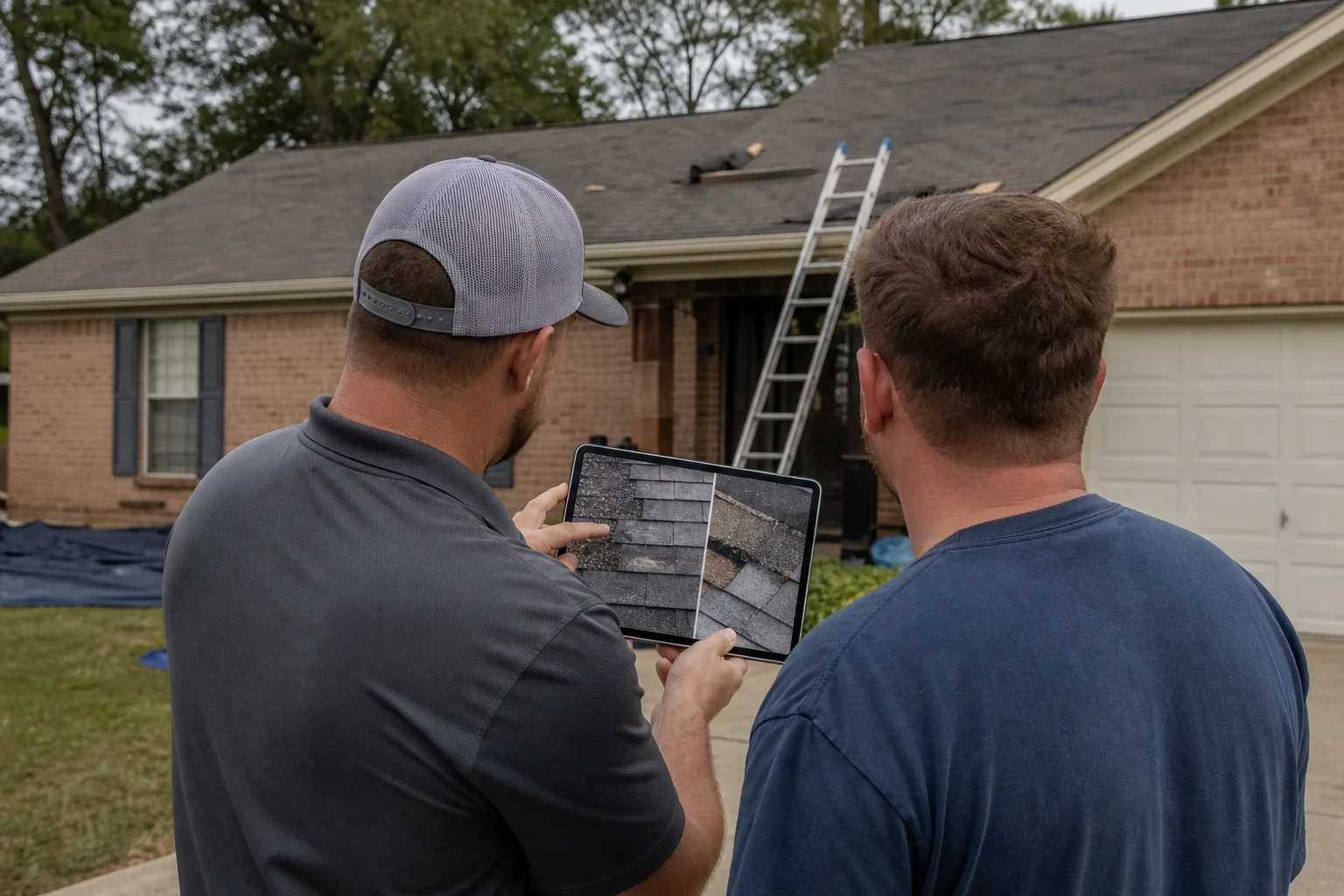
Free inspection and photos
We climb up, check the shingles and flashing, then head into the attic. Every problem gets photographed so you can see it for yourself. You get a written estimate with each repair item listed.
- 2
Setting up
On the day, we park out of your way, set ladders on solid ground and cover plants and the AC unit near the work area.
- 3
The repair itself
We remove only what we need to, fix the cause and rebuild the area layer by layer: decking, underlayment, flashing, then shingles. We hand-seal the shingles around the repair so they stay down until the sun bonds the seal strips.
- 4
Cleanup and a last look
We haul off the old shingles and roll a nail magnet across the lawn and drive to pick up anything that fell. Then we walk you through photos of the finished repair.
What Moves the Price of a Roof Repair
We price every repair after we've seen your roof, so the number reflects your roof and not a guess. The biggest drivers are how large the opened area gets and the shape the wood is in once it's exposed. If the decking turns out worse than it looked, we stop and show you before doing more.
- Size and spot of the damage
- A single pipe boot is a short job. A leak that has run under several courses of shingles takes more material and time.
- Pitch and access
- Steep slopes need extra safety gear and go slower. Second-story roofs and tight side yards add setup time.
- Shingle type and matching
- Architectural shingles cost more than three-tab. A discontinued color may mean borrowing shingles from a hidden slope to get a match.
- What's under the shingles
- Rotted decking or missing underlayment has to be replaced before new shingles go on. We can't know for sure until the area is open, which is why we show you photos.
- Layers on the roof
- If there are two layers of shingles, a clean repair means working through both.
Roof Repair Questions
- Can you match my existing shingles?
- Usually close, sometimes not exact. Shingles fade with age, so even the same color from the same maker can look a shade different at first. We bring samples, show you the best match and tell you honestly how it will look before we start.
- How long does a typical repair take?
- Most repairs take a few hours to a day. Bigger flashing or decking jobs can run longer, and we note that in the estimate. We won't open up a roof if rain is due before we can close it back up.
- Should I repair or replace my roof?
- If the damage is in one area and the rest of the shingles are flexible and holding granules, repair is the smart choice. If we find brittle shingles across the roof, several leaks or soft decking in many spots, repairs start costing more than they're worth. We show you the photos and give you both options.
- Will my insurance pay for the repair?
- That depends on what caused the damage. Policies tend to pay for a sudden event like a windstorm or hail, and tend not to pay for a roof that simply wore out over the years. We'll hand you the pictures and a plain account of the damage, but deciding what the policy covers is the adjuster's job. If a storm caused it, our storm damage repair page explains how we help.
- Can you fix a leak in the winter?
- Yes, within limits. Shingles get stiff in hard cold and the seal strips won't bond until warmer days, so we hand-seal each new shingle with roofing cement. If the roof is icy or too wet to work safely, we tarp the area and finish on the next good day.
Have the Leak Looked At Before It Spreads
We'll come out, find the source and give you a written price for the repair. Right now we're also running this offer: Limited Time — $50 Off Your First Service Call.