ServicesSiding
Siding in Bromley, Installed With the Hidden Parts Done Right
We repair and replace siding on your home. Most of what decides how long it lasts sits behind the panels: the wrap, the flashing around windows and how each nail goes in. We take our time on those parts, then show you what we did.
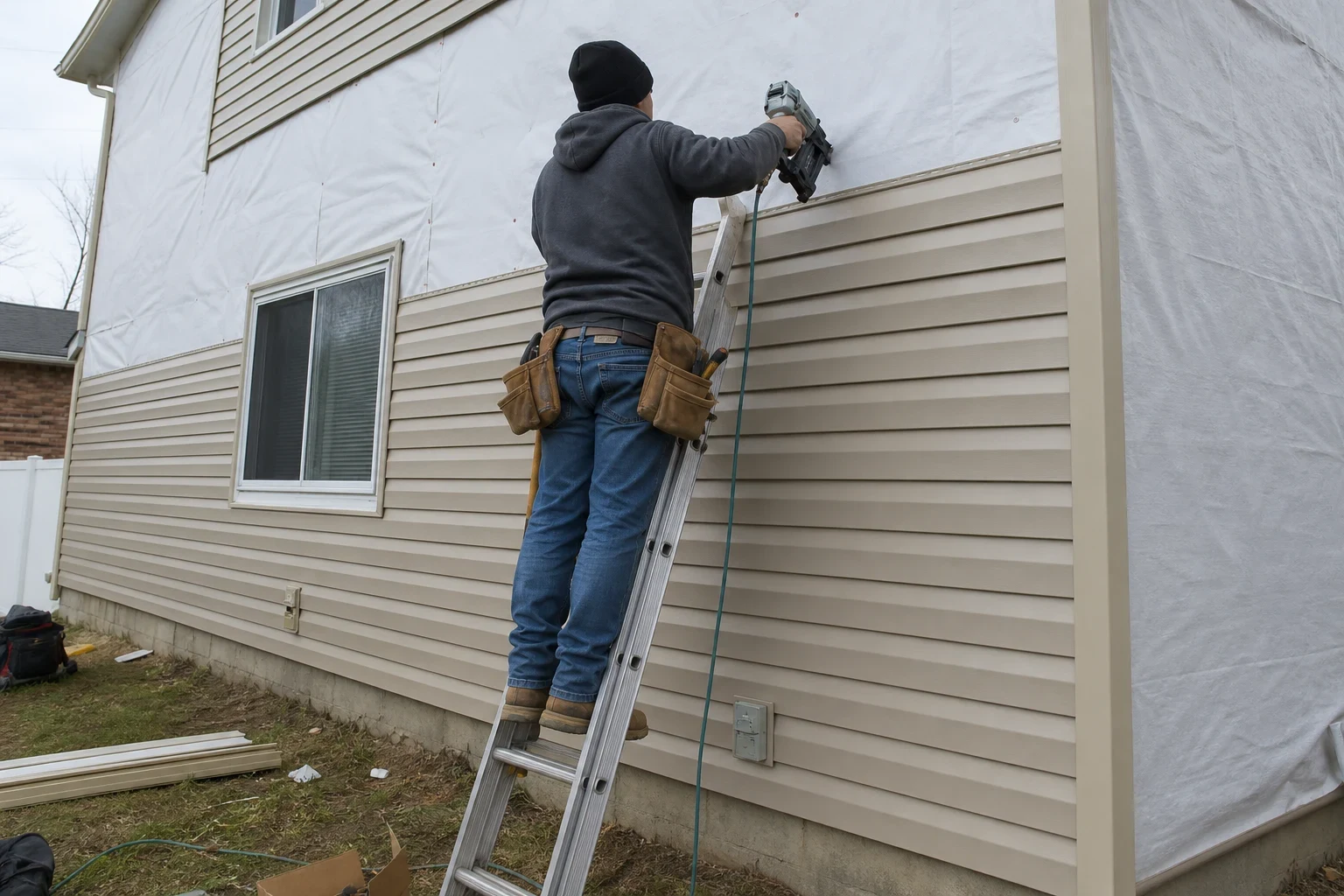
What Siding Work Covers
Siding is the skin of your home. It sheds rain, blocks wind and protects the wall framing behind it. If the damage is limited to a handful of panels, swapping out just those is often all it takes. When the wall behind is wet, the old siding is brittle or the color can't be matched, replacing a full wall or the whole house makes more sense.
We tell you which one you need after we look. If a repair will hold, that's what we quote.
Siding also ties into the roof. Where a roof line meets a wall, water runs right down that joint. That's why we look at the two together, and why siding sits alongside our roof repair and gutters work.
What Goes Into a Siding Job
Housewrap lapped like shingles
Every course of wrap overlaps the one below it, so water that gets behind the siding runs down and out. Seams get taped. Torn wrap gets patched before any panel goes back on.
Window and door flashing
We flash around openings in the right order: bottom first, then sides, then top. Done backward, the tape funnels water into the wall instead of away from it.
Vinyl nailed loose, not tight
Vinyl grows and shrinks with the temperature. We nail in the center of the slot and leave a little play so panels can move. Nailed tight, vinyl buckles in summer and cracks in a hard freeze.
Kick-out flashing at roof lines
Where a roof edge dies into a wall, we add a kick-out flashing that turns water into the gutter. Without it, water soaks the wall below. This one small piece saves a lot of rotted sheathing.
Fiber cement with proper clearances
Fiber cement needs a gap above the roof and above the ground so it doesn't wick water. We seal and paint every cut edge before it goes up.
Trim, corners and cleanup
J-channel, corner posts and soffit trim are cut clean and fitted snug. At the end of the day we pick up scraps and run a magnet over the yard for nails.
Signs Your Siding Needs Work
Warped or wavy panels
Panels that bow or ripple were often nailed too tight. They'll keep fighting the nails until something cracks.
Soft spots in the wall
Push on the siding near a window corner or below a roof line. If it gives, the sheathing behind it may be wet.
Stains running down the wall
Dark streaks below a roof edge or window point to water getting where it shouldn't. A missing kick-out flashing is a common cause.
Cracks after a cold snap
Old vinyl gets brittle with age and sun. Winter freeze and thaw opens small cracks that let wind-driven rain in.
Panels loose or missing after wind
Strong gusts can unlock a course and peel it off. If the storm also hit your roof, our storm damage repair page covers what we check.
Peeling paint inside
Bubbling paint or mildew on an inside wall near a window can mean the outside flashing failed.
How a Siding Job Runs
- 1
We look first
We walk the outside of your home, press on suspect spots and check the joints at the roof and windows. You get photos of what we found and a written estimate by line.
- 2
We protect the yard
Before any panel comes off, we cover plants near the wall and set tarps to catch debris. We let you know where the ladders and dumpster will go.
- 3
We open the wall and fix what's behind it
Old siding comes off one section at a time. If we find wet or rotted sheathing, we show you before we replace it. Then the wrap and flashing go on.
- 4
We hang the new siding
Starter strip, then courses up the wall, checked for level as we go. Each nail is set with room to move.
- 5
We walk it with you
When we finish, we walk the house with you, point out the flashing details and clean the site.
What Moves the Price of Siding
Every house is different, so we price after we see it. The biggest swings come from what we find behind the old siding and how much wall there is to cover. You'll have the number on paper before the first panel comes off.
- How much wall there is
- Bigger walls take more panels and more hours. Second stories and tall gables add ladder and staging time.
- Material choice
- Vinyl costs less to buy and hang. Fiber cement costs more and takes longer to cut and paint, but it holds up well.
- Condition of the sheathing
- Rotted boards behind the siding have to be replaced. We can't know how much until the wall is open, so we show you and agree on it before we go further.
- Windows, doors and trim
- Each opening needs flashing and trim. A wall with many windows takes longer than a plain one.
- Old layers to remove
- Some homes have siding over older siding. Taking off two layers adds labor and hauling.
Siding Questions We Hear
Something not covered here? (859) 695-6367
Will a few new panels blend in with my old siding?
Usually they come close. We carry sample pieces and hold them up against your wall to compare the shape and the color. Vinyl fades in the sun over the years, so a fresh panel can look a little darker for a while. When the difference is too obvious, we may suggest redoing that whole side of the house so it reads as one color.
Vinyl or fiber cement, which is better?
Vinyl is lighter, cheaper and needs no paint. Fiber cement is heavier, resists dents and looks more like wood, but needs paint every so often. We'll lay out both for your home and you decide.
Will someone need to stay home during the job?
Not usually. Everything we do happens on the outside of your home. Leave the gate open and an outdoor outlet we can use, and we'll touch base when we arrive and again before we pack up each day.
How long does a siding job take?
A small repair can be done in a day. A full house usually takes several days, longer if we find rotted sheathing or the weather turns. We'll give you a realistic schedule with the estimate.
Can you do siding in winter?
Yes, with care. Vinyl gets stiff in the cold and cracks if forced, so we cut and nail it gently and leave room for summer growth. Some jobs go better in spring, and we'll tell you if yours is one.
Have Us Look at Your Siding
We'll walk the walls, check the flashing at the roof line and tell you plainly whether you need a repair or new siding. The estimate costs you nothing.